CHRISTINA BOWERS PH.D
  • Home
  • Academic Research
  • Investigation Resources
  • Science Club
  • About
  • Blog
  • Contact
  • Group 4 Project

Anthropological research

As an undergraduate in the Bard College, I worked on two projects in the Anthropology Department.   The first was an independent study under the direction of Christopher Lindner, aimed at gathering preliminary data on the paleoethnobotanical remains of the Grouse Bluff archeological site.    I was the first person to engage in this work and the foundations of my exploration contributed to a larger study that was ultimately published by Dr. Lindner.   

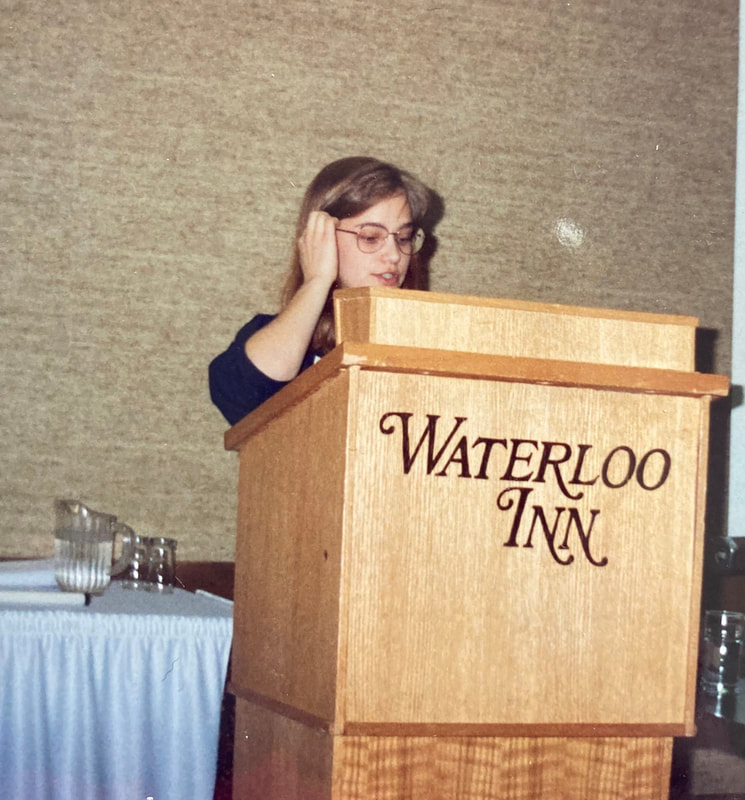
​The second encompassed my interest in the roots of scientific racism.  Under the mentorship of Dr. Mario Bick, I investigated a German ethnologist against the backdrop of National Socialism, in work that ultimately formed the basis of  my senior thesis in the Bard Department of Anthropology, that I presented at the 31st Annual Conference of the Northeastern Anthropological Association in Waterloo Ontario.

Bard College Senior Thesis

As an anthropology major, my studies exposed me to the history of theories important in the field.  I became extremely interested in the intersection of historical anthropology and the biological sciences.  In particular, I wanted to understand the roots of scientific racism and how these influenced historical attitudes towards human diversity.

In the 1800s, scientists sought to quantify human diversity biometrically, using tools such as phrenology.  Lumps, bumps and head shape were believed to reveal underlying behaviorial capacities or tendencies.  Today, phrenology is relegated to the realm of  "pseudoscience".  There is no connection between physiological head shape and human behavior. 

Eugenics was the attempt to influence human traits through reproduction control.  Forced sterilization was one egregious implementation of a social policy aimed at preventing those deemed "unfit" from reproducing.   As a young student, I was shocked to learn that the National Socialist sterilization policies enacted in Germany  were modeled on policies in place in the United States.  The line between science and psuedoscience captivated my attention and I was drawn to understand the intersection between what was undersood scientifically and what was enacted socially and politically.   

My family lived in Germany during the 1980s.  During the Bard winter intersession, I visited the state library in Baden Württemberg (Staatsarchiv) to explore ethnology around the time of the national socialist Germany.  I learned that many anthropologists fled Germany during this period, but a few managed to stay active throughout the period and beyond.  I was interested in exploring the writings of Wilhelm Emil Mühlmann.  I was surprised to find that his monographs published during the National Socialist years were mysteriously missing from the state archives. 

My senior thesis focused on the writings of Mühlmann before and after the National Socialist years in Germany.   I learned that Mühlmann not only continued writing and teaching anthropology throughout the period, but also into the modern period, seemingly without accountability.

My exploration barely scratched the surface of an important area of research.  As a young scientist, early in my career, the seeds of awareness were planted, that no matter how "current" the research, culture and social influences will always impact science and the pursuit of the truth.   

Grouse Bluff Paleoethnobotanical exploration

Working with Dr. Lindner at the Bard College Ecology Field Station, I isolated carbonized seeds from soils collected from several test pits on Grouse Bluff, a 3000 year old archaeological site on the Bard College campus, by Tivoli Bay of the Hudson River. 

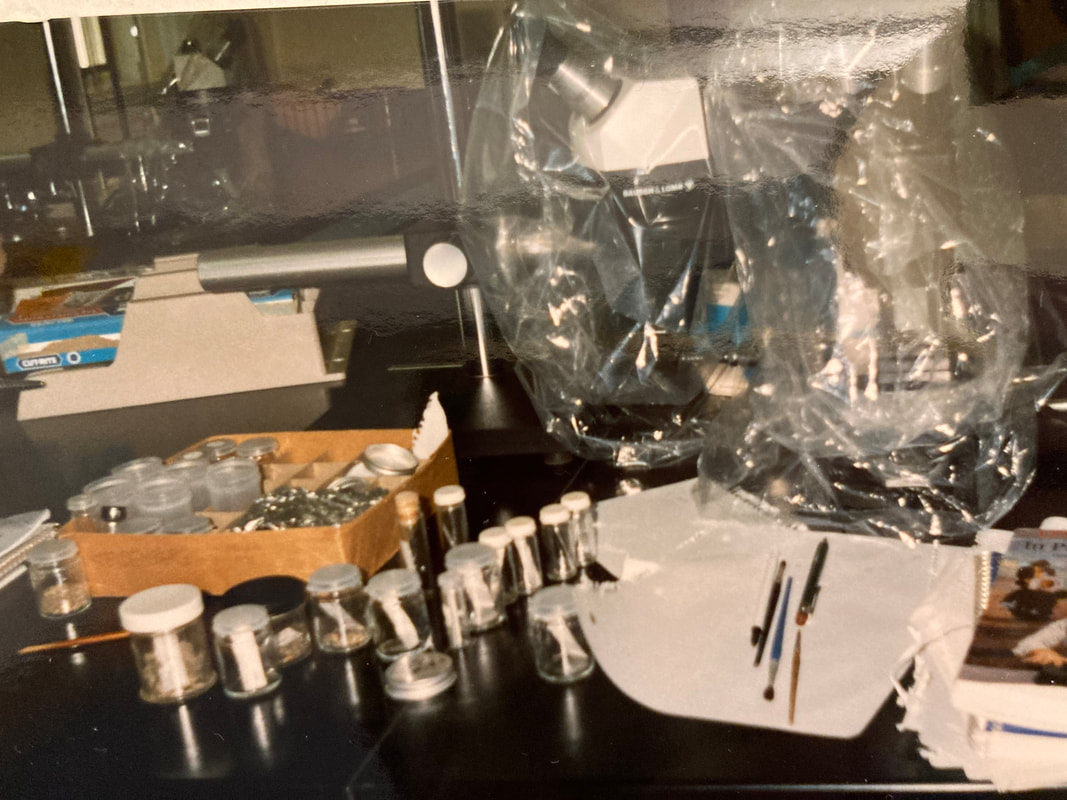
I was the first person to engage in flotation analysis for this project and chemical characteriziation of test pit soils.  As field station caretaker, I had access to basic lab equipment to support my investigation.  The early days involved great excitement, along with significant trial and error.  For example, soils were scooped into a large trash bin of water and charred seeds floated to the top.  A sieve was used to recover the floating debris which was then deposited onto newspaper.   For reference, a "period" in newsprint is very similar in size and appearance to a charred seed.   We quickly learned to use unprinted paper to recover the seeds.   Once dried, I also learned that a heavy sigh, when viewing under the microscope, could blow all of the seeds away (a rookie move!).  

My independent study paved the way for  a larger body of work involving the contributions of numerous Bard students and researchers that ultimately helped to  reconstruct an understanding of the plants important to the inhabitants of the 3000 year old site  (Lindner 2002).   
 
During my exploration, I wondered how the chemical characteristics of the soil might reveal important site features.   I  analyzed soil pH along transects, ultimately showing that soil localized to hearth pits was more basic. 

 I am indebted to Dr. Lindner and grateful for my Bard learning experience, which not only exposed me to the joys of fieldwork but piqued my curiosity about the role of biogeochemical cycling and soil microorganisms that could influence site feature preservation.    From this point fowards in my career, I knew I wanted to study microorganisms.

The Bard motto is "a place to think."   My undergraduate years at Bard shaped my expectation of what education should look like.  Faculty brought their expertise to my learning experiences which were largely individual and driven by personal curiosity.   I am grateful for the opportunity to experience the support and opportunity to engage in true open-ended inquiry.  These roots shaped me as a life-long learner and set a high bar for my own role as an educator.
Picture
Flotation project in the Bard Ecology Field Station May 1990.
Picture
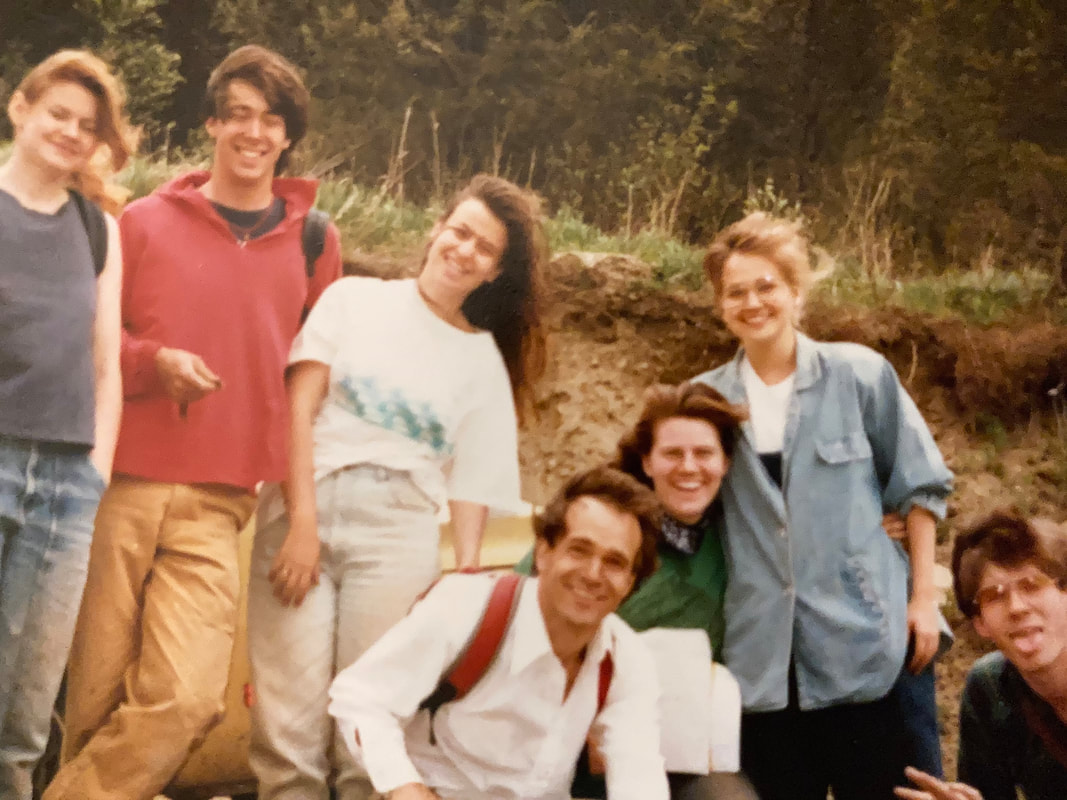
Center front: Dr. Christopher J. Lindner and the first Bard Archaeology class. (I am second from the right in blue denim). Spring 1990.
Picture
Presentation of my Senior Project at the 31st Annual Conference of the Northeastern Anthropological Association, Waterloo, Ontario.
Picture
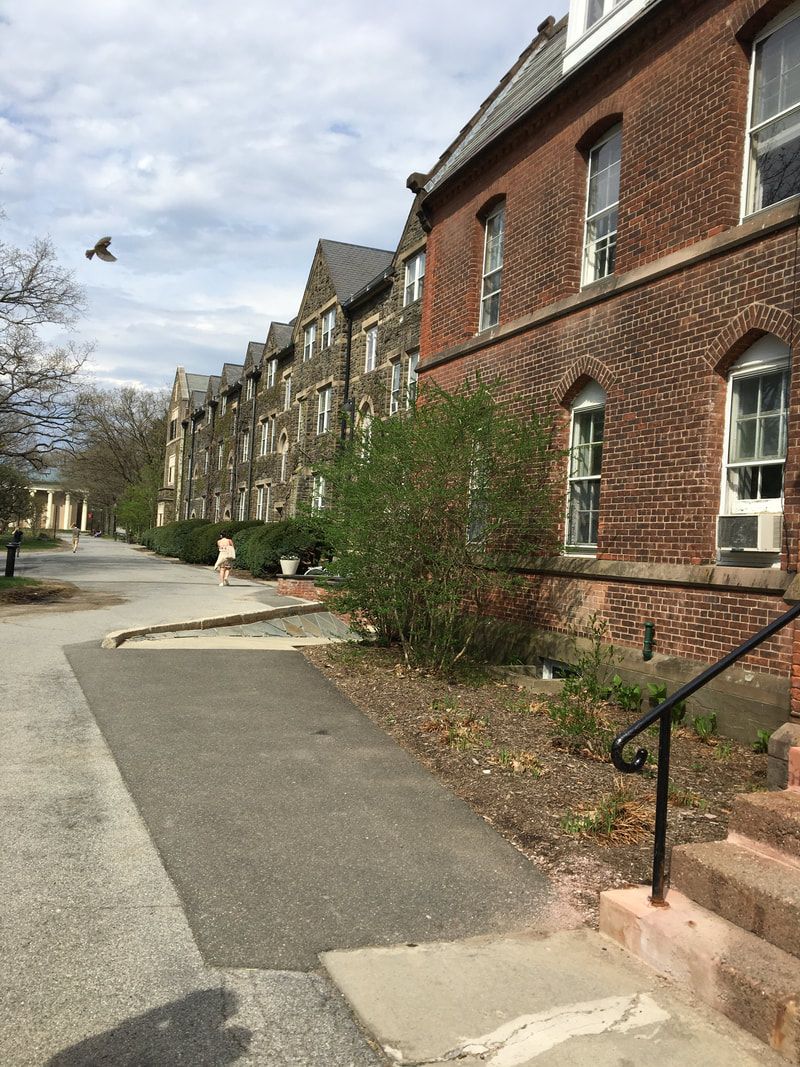
Bard College Campus, May 2018.
LIfe is wonderfully complicated.   Stay curious.  Be skeptical.    And above all, ask many questions!